Our most recent Living With Brain Injury course finished in Reading in May 2026. If you are wondering what to expect and whether this course might be right for you or someone you support, this article walks through exactly what it involves, week by week.
Hannah, who attended this last course, put it simply:
“The course has helped me understand myself more and cut myself some slack in trying to get back to ‘normal’.”
Summary
What you will find in this article:
- What is the Living With Brain Injury Course?
- Who is the course for?
- What to expect each week
- Week 1: Story and support system
- Week 2: Insight, awareness and understanding your brain
- Week 3: Understanding cognitive changes after brain injury
- Week 4: Executive function and self-compassion
- Week 5: Managing emotions and impact on relationships
- Week 6: Energy and fatigue management
- Week 7: The Headway Thames Valley Guide to Life
- Week 8: Progress and looking forward
- Meet the facilitator
- What happens after the course?
- How to join Headway Thames Valley services
What is the Living With Brain Injury Course?
The Living With Brain Injury is a free, eight-week group programme for adults who have experienced an acquired brain injury (ABI). It is led by trained clinicians from our neuro-rehab team and runs at various locations across South Oxfordshire and Berkshire, depending on where the majority of participants are based. The last two courses were in central Reading.
Each session runs one morning a week for two hours and covers a different aspect of life after brain injury. From understanding how the brain works, to managing fatigue, emotions and relationships. Sessions are interactive with space for discussion and sharing what is and is not working in your own life.
The course is built around four core principles, which we call the 4 A’s:
- Awareness – understanding how your brain injury is affecting you
- Acceptance – coming to terms with what has changed
- Adaptation – finding new ways to do things
- Adjustment – making those changes part of everyday life
Tina, who completed the May 2026 course in Reading, summed up one of its quieter but important benefits:
“I have enjoyed meeting other people with brain injuries.”
Who is the course for?
The course is open to adults living with an acquired brain injury, including those caused by stroke, traumatic brain injury, brain tumour, encephalitis or other neurological events.
You do not need to be at a particular stage of recovery to join. Some people come quite soon after their injury, others attend years later, when they are still looking for answers or strategies.
Sometimes the path to the course starts with a conversation. Alison, who attended our most recent course, described how she got there:
“I was so glad that my husband helped me make the initial contact with Headway Thames Valley and then speak to Heather, the Client Services Coordinator.
I really appreciate that she mentioned the Living with Brain Injury Course.”
The course is rated 10 out of 10 by our clients, and 98% of people would recommend our services. If you are not sure whether this programme is right for you, get in touch and we can talk it through.
What to expect each week
Here is a breakdown of what the course covers, week by week.
Week 1: Story and support system
The first thing to expect in our brain injury course is introductions.
Knowing where each person is on their journey helps the group and the facilitators shape the sessions that follow. A confidential, warm space is established from the start. Group rules are agreed together, and trust builds gradually.
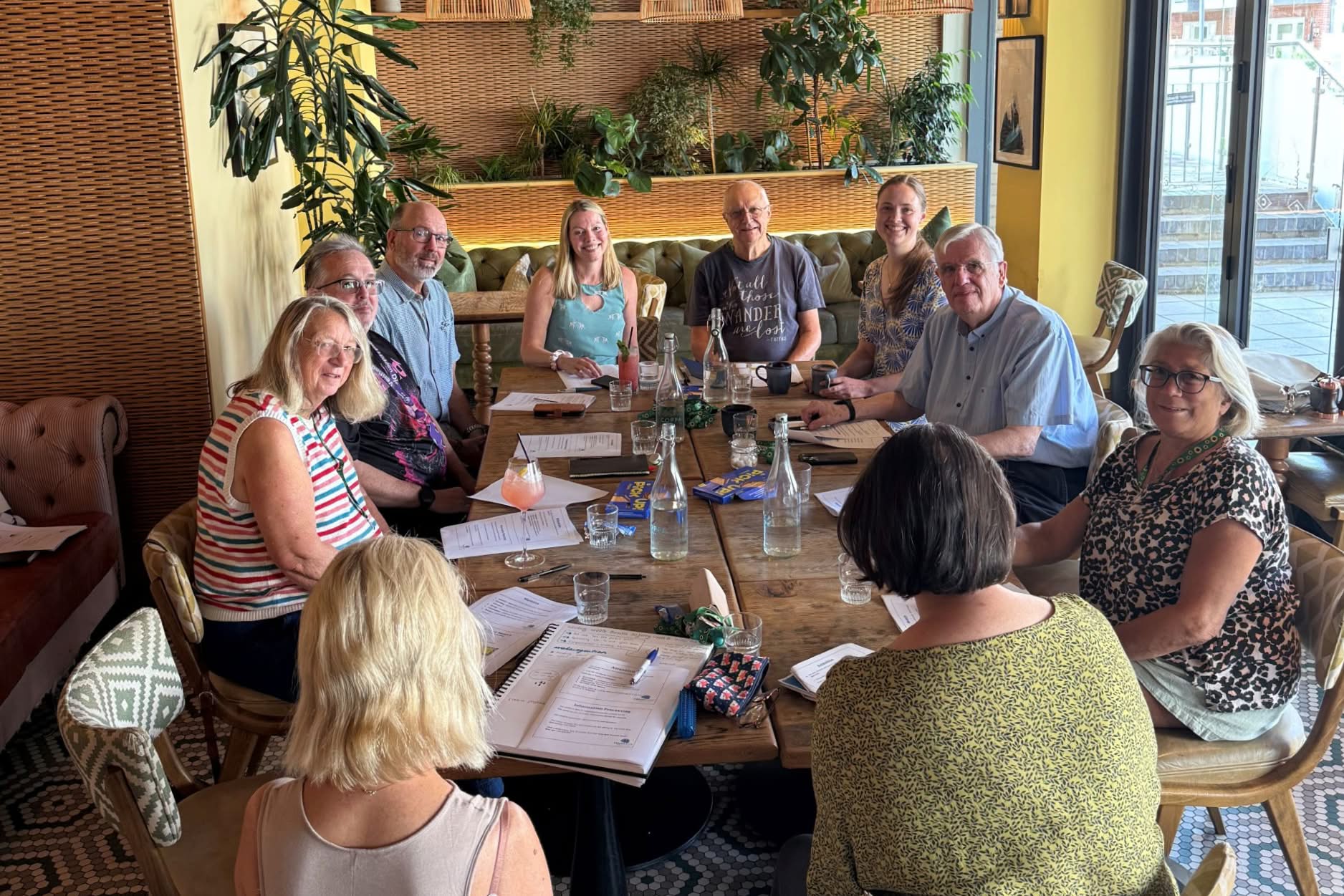
Maidenhead, August 2026 | Final session group photo
One of the most important things covered in week one is each participant’s support network. Marie, our Neuro Rehab Lead and course facilitator, explains why:
“The first week is incredibly important to help us as trainers and the group to understand how each person is impacted by their head injury and where they are on their recovery journey. As part of this discussion we look at each person’s support system. This might be a partner, family member, friend, neighbour or work colleague. If a person cannot identify someone, we explore the people they come into contact with as possible support links. For example, in our last course a social prescriber was identified as the supporter.”
Week 2: Insight, awareness and understanding your brain
This session introduces some neuroanatomy: what different parts of the brain do, and what happens when those areas are affected by injury. The aim is to help participants make sense of their own diagnosis in practical terms and explore their potential.
Understanding their strengths, what areas need more support and what the people around them need to understand about their experience is a big part of the second week.
It is worth knowing that gaining insight is not always a comfortable process. As awareness grows, so can the realisation of challenges that had gone unnoticed. This is a normal part of the journey and the group is there to support it.
Week 3: Understanding cognitive changes after brain injury
Cognitive changes are among the most common effects of brain injury and among the most confusing to live with.
This week looks at areas such as information processing, attention and memory and immediate ideas for managing the challenges they notice in themselves.
It also explores the factors that affect how well the brain functions day to day: emotional wellbeing, fatigue, exercise and diet. They have a direct impact on cognitive performance and small changes can also help. As Marie adds:
“We recognise that if our participants can understand their needs and monitor demands their daily life will be more manageable. This may mean for example saying ‘no’ to some things to conserve energy for things that they deem a priority.”
The goal is not perfection, but to optimise life to suit the brain they have now.
Week 4: Executive function and self-compassion
Marie explains how every session begins:
“We recap the key messages from the week before and explore how individuals have applied any strategies in their own lives. We also explore the barriers and problem-solve as a group.”
Week four goes deeper into executive functions: the higher-level skills that allow us to plan, problem-solve, make decisions, stay focused and regulate our own behaviour. These are often affected after brain injury and can be the trickiest changes to explain to others.

The session also explores how the prefrontal cortex interacts with the limbic system (the brain’s emotional centre), and how fatigue and stress can significantly narrow participants’ capacity to manage thoughts and feelings. Understanding the biology behind this can be genuinely reassuring. Marie adds:
“We are careful to highlight the importance of self-compassion as when a participant is relearning skills, returning to responsibilities or taking on new roles, errors will happen. As with anyone with or without a brain injury, learning isn’t linear.”
The message is that there are no errors, only lessons learned.
Week 5: Managing emotions and impact on relationships
Brain injury affects participants’ lives and the lives of those closest to them. Week five covers how to manage emotional responses and build emotional literacy to help reduce conflict.
We look at the impact on relationships, including how to find the right words for difficult situations and how to receive feedback. Participants are also encouraged to think about the value of spending time with people they feel comfortable with and setting boundaries when they are struggling to cope.
The session also returns to self-compassion, with practices that encourage participants to empathise with those close to them as well as themselves.
Week 6: Energy and fatigue management
Fatigue after brain injury can be overwhelming and it affects everything: thinking, mood, relationships and the ability to engage with daily life. This session looks at the principles of fatigue management in depth.
Topics include recognising the signs of fatigue, understanding its causes, learning how to conserve energy more effectively and why planning for rest days matters just as much as planning activities.
The central message is that fatigue amplifies all effects of brain injury. Managing energy well is one of the most important foundations for everything else.
Week 7: The Headway Thames Valley Guide to Life
By week seven, participants have built up a substantial bank of knowledge and strategies.
This session draws it all together around ten essentials for recovery and wellbeing that we have created as a guide from now on:
- Stability
- Manage energy
- Exercise
- Practise
- Strategies
- Support
- Self-awareness
- Acceptance
- Mindfulness and meditation
- Goals and purpose
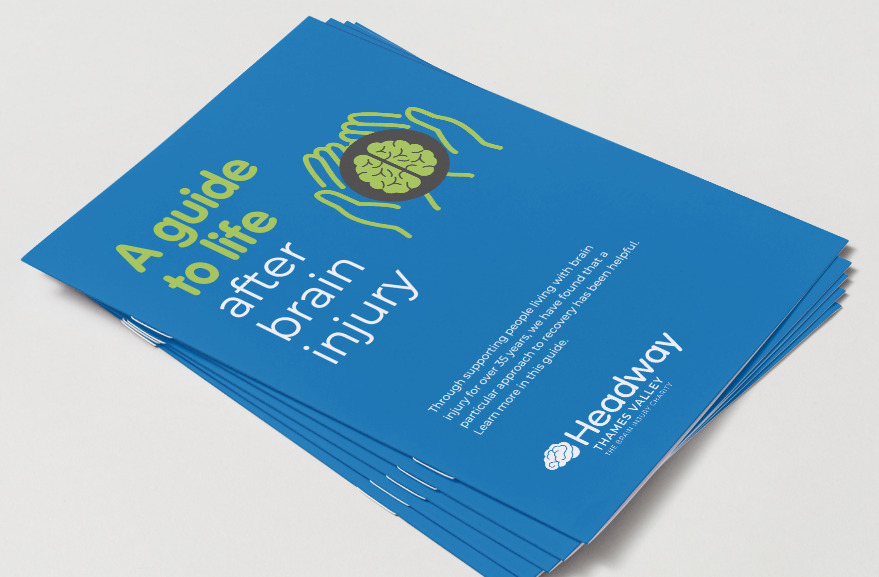
Participants use this session to set realistic goals for taking what they have learned into their daily lives. Hannah, reflecting on the course as a whole, described what that shift in perspective meant to her:
“I no longer see myself as having failed to recover, but understand how I am.”
Week 8: Progress and looking forward
At the final session of the Living With Brain Injury Course participants can expect to reflect on the full journey: looking back at week one, how things are now, and what comes next.
Part of the final session is reframing what life can look like now. Recognising new possibilities and finding new meaning can help participants plan the next chapter with more confidence. Alison’s feedback confirms it:
“Learning strategies to manage in real life has given me a real boost. Thank you all so much!”
We want participants to leave the course knowing that the recovery does not have a ceiling and their self-awareness will continue to grow, helping them find new ways to adapt to the life they want.
Meet the facilitator
Marie runs our Living With Brain Injury courses alongside a Neuro-Psychologist from the NHS Community Based Neuro-Rehab Team. She is also part of our Neuro-Rehab Service, runs our Community Support Groups and supports clients with their communication needs. Her background in speech and language therapy and counselling shapes much of the course.
Hannah’s view on the team behind the sessions speaks for itself:
“The people who run the course are so friendly and knowledgeable. The topics have been all relevant to my symptoms.”
What happens after the course?
We hold regular catch-up meetings for people who have completed the course so they can stay connected with our community for as long as they need.
Our wider services are also available, including neuropsychology, speech and language therapy, occupational therapy, physiotherapy, art and music therapy, and one-to-one advice and counselling.
How to join Headway Thames Valley services
You can refer yourself, or be referred by a GP, occupational therapist, neurologist or other healthcare professional.
Read stories after brain injury
Discover Andy’s journey after being diagnosed with a brain tumour, Len and Sue’s story supporting a partner after brain injury and Lucy’s story navigating work and social life.
Stay connected!
Follow us on Instagram for more stories, tips and support, and subscribe to our newsletter to get updates straight to your inbox.