Andy was diagnosed with a brain tumour at the age of 54. At the time, Andy worked as a senior sales consultant and lived a busy, rewarding life. After the Neurosurgery, he had to learn how to adapt after a brain injury while rebuilding his confidence, work life and relationships.
Today, ten years after his procedure, he shares his story from first noticing balance issues to adjusting to life after brain injury with the support of family, friends and specialists’ help.
Life before diagnosis and learning to adapt after a brain injury
“Prior to my diagnosis and procedure, I was a ‘normal’ husband, father and brother.
I was employed as a senior sales consultant working with the NHS and specialising within hospital operating suites and theatres… Yes, I did know my surgeons before they went to work on me!
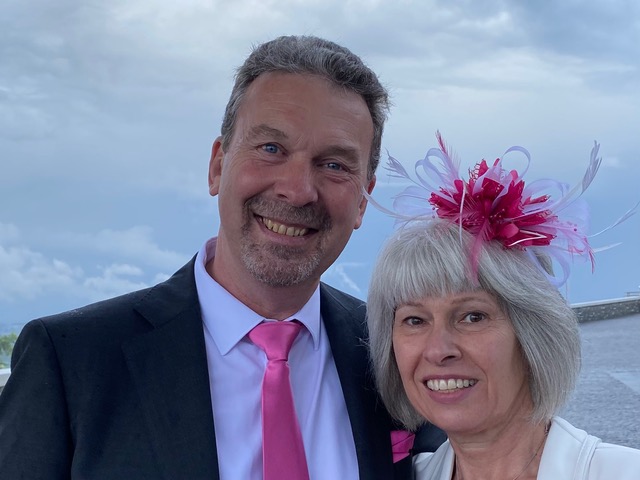
Andy at his daughter’s wedding
My situation did not occur as a result of an accident or trauma – rather I was diagnosed with a benign left-sided tumour – a Vestibular Schwannoma.
I first presented with balance issues after realising that I would collide with a door frame or stumble during walks. The GP initially thought it was ENT-related (ear, nose and throat) and they referred me for a scan of my ear and canals.
At the follow-up to this MRI scan, I was diagnosed with my brain tumour!
This diagnosis was a shattering moment.”
Initial shock and being unfit to work
“You do not expect to be told you have a tumour.
All sorts of fears, thoughts and feelings raced through my mind and that of my wife.
There were immense feelings of anger, frustration and incomprehension. ‘Why me? What have I done? I’m a nice guy. There’s plenty of people out there who deserve this – not me! It’s not fair!’
Physically, I started to suffer from increasing loss of balance and had to give up sports for fear of injury if I fell.
Work was becoming more difficult as I was needing to use a walking stick for balance.
My company provided me with a colleague to escort me for safety whilst at work in hospitals. But it soon became apparent that I was starting to become a physical danger to myself and others.
I was signed off, unfit for work. In the meantime, I was becoming more compromised as time went by.”
Finding support for feelings of anger and frustration
“My feelings of anger and frustration were having an adverse affect upon my family.
They were unable to help as this situation was equally new too them.
I bordered upon depression and realised that we could not survive this without support.”
Strategies to cope with the new feelings
“The biggest single steps we took were:
Allowing me to see, understand and accept that sometimes things happen that we have no control over and no ability to resolve on our own.
Worry and anger can be seen as a never-ending circular railway track upon which your feelings revolve time and again.
Every individual has a set of ‘core values’ that define us and make us who we are.
If something is at odds with one of these core values, then the world is an unhappy place at that time. And we need to come to terms with this.”
The brain injury post-surgery
“I went for my Neurosurgery procedure at the John Radcliffe NHS Foundation Hospital in Oxford in January 2016.
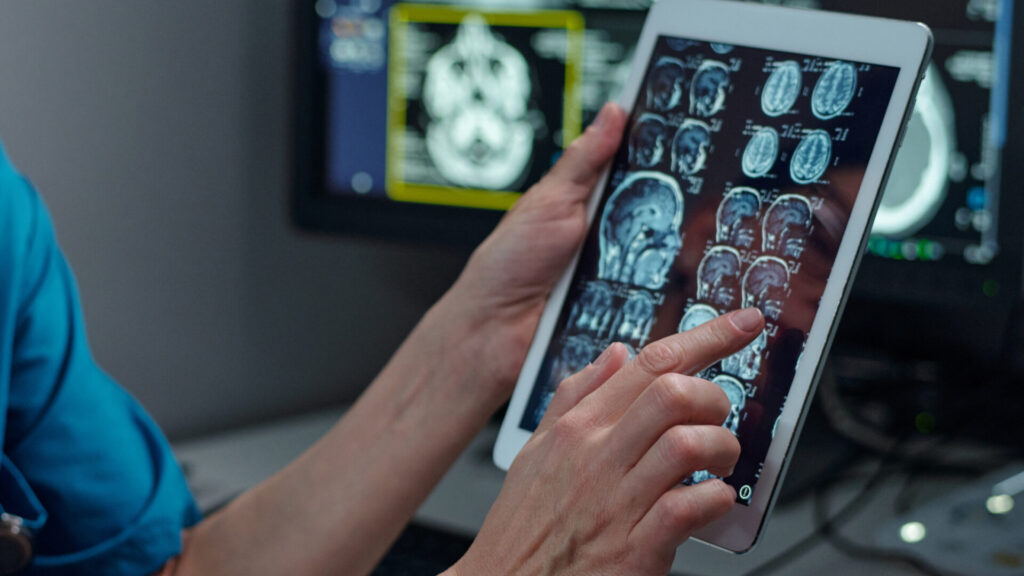
Post operatively, I was left with a brain injury. This was threefold:
- My memory (immediate and short-term) was considerably affected. Names, faces, dates, details etc. Interestingly, pre-diagnosis memory seems to be much better.
- Word selection is compromised. I sometimes cannot recall the word I want and sometimes I use the wrong word completely (which leads to some hilarity).
- I cannot now “think on my feet” and cannot counter a discussion or argument point. I haven’t won an argument with my wife for ten years!
I was constantly tired, physically and mentally. There was no let-up, constant bombardment of the senses.
I would miss things in conversation, my hearing was severely affected, my balance took time to recover and I began to doubt myself.
I would get overly upset at things I saw and heard.”
Returning to work and changing directions
“The biggest problem for me upon my return to work was not being able to think on my feet any more.
This was especially problematic when trying to close a high-value sales deal.
I failed many times and soon realised that I could no longer do my job.
I feared being ‘let go’, so I decided upon a change of career direction. I put together a highly detailed and persuasive business case for me to change jobs rolls from sales to ‘clinical specialist’.
I continued with this role until retirement.”
The support to live life after brain injury
The biggest problem I faced was the fact that I am different now.
With the professional help we received at Headway Thames Valley we have learned how to cope with it, deal with it, embrace it and laugh at it! (well, laugh at myself really)!
There was a feeling that I was ignored and talked over. This was addressed by Marie [Headway Thames Valley’s Neuro Rehab lead].
Together with learning to recognise potential problems before they manifest themselves, address them and deal with them.
Therefore, remaining calm and unflustered… thank you Marie.”
Family and friends play a big part
“My family is everything, they and my friendship group were my biggest saviours. They took time to learn and understand what I was struggling with.
Little things, such as giving me time to find the right words, for example. They would be delightfully irreverent if I got it wrong, though. And there was no mercy.
I should say, I never wanted any pity – just to return to the laughs and banter we all shared pre-op.”
Hopes for the future
“My first message to a newly diagnosed person would be ‘don’t panic’. There is help out there, but not everybody is aware of what and where help is available.
My second message is ‘you’ve got this’.
Humans are resilient and can adapt to most things. Go and get help, and don’t be ashamed of asking.
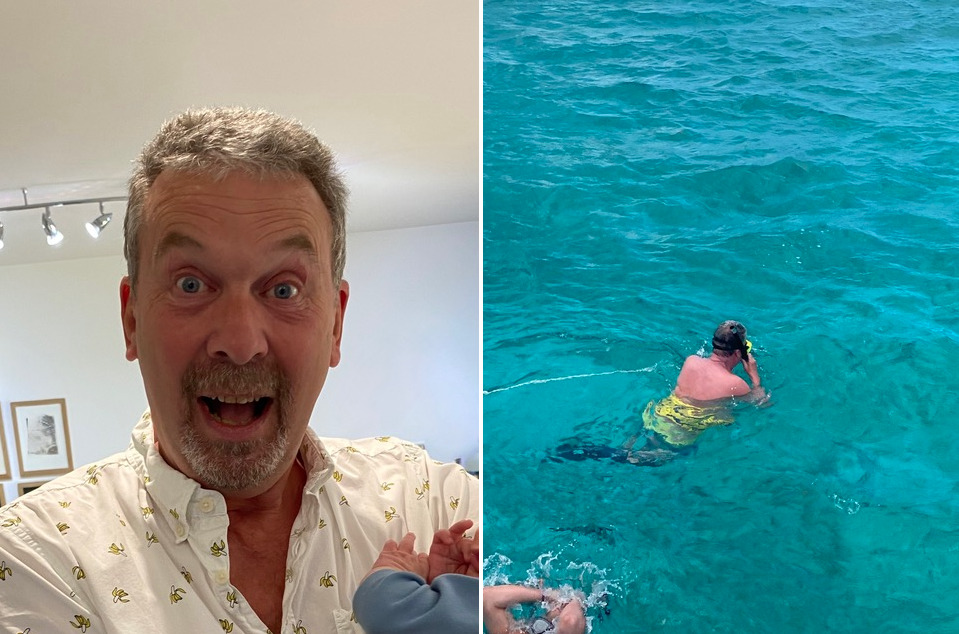
“My first grandchild arrived 10 years after my diagnosis and procedure! Then more recently, daughter’s wedding, holidays and snorkelling etc. Never give up!”
I hope that, over time, brain injury is accepted in the same way that mental health is now. There are differing degrees of injury and a whole scale of effects that may or not be visible to others. Understanding that somebody may have issues is key.”
Other recovery after brain injury stories
You can also read supporting a partner after brain injury Len and Sue’s story, Lucy’s story navigating work and social life or Leigh’s story of rediscovery to learn about their journeys to recovery after a brain injury.
Stay connected!
Follow us on Instagram for more stories, tips and support, and subscribe to our newsletter to get updates straight to your inbox.