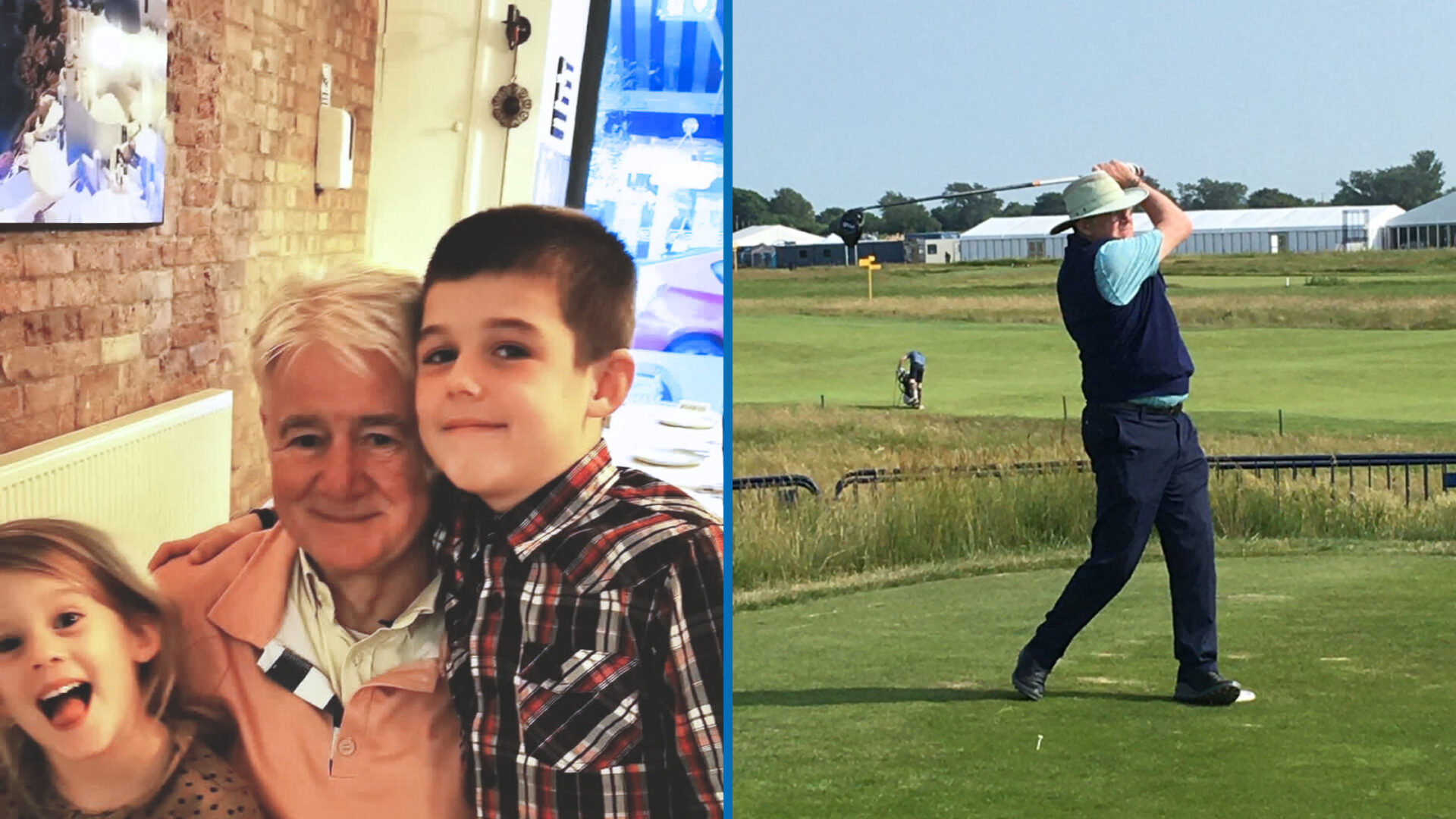
For Sue, supporting a partner after brain injury became part of her everyday life overnight after a Sunday in January 2025.
Len and Sue have been married for 38 years now. They live in Watlington, having moved there 11 years ago after many years in Maidenhead. Together they have two children and two grandchildren, who play a big part in their lives. Len is 65 and Sue is 66, and before that Sunday, their lives were full of social activities.
Today, Sue shares their journey, highlighting the importance of partnership, support, reaching out to friends to give the partner a break, and keeping a sense of humour when things don’t go as expected.
The life before and what happened
“Len had retired February 2024 and I retired December 2024.
Len played golf 4 times a week and has been a member of Henley Golf Club since his early 20’s. He also served on the Seniors committee there. In addition, he ran a mini league at the golf club for members who liked playing early on Saturdays.
He was also an avid reader, particularly biographies about historical figures such as Churchill, Roosevelt and books about the First and Second World Wars.
We looked after the grandchildren every Wednesday and enjoyed a busy social life, going to the theatre in London regularly. As well as eating out, the National Trust and English Heritage.”
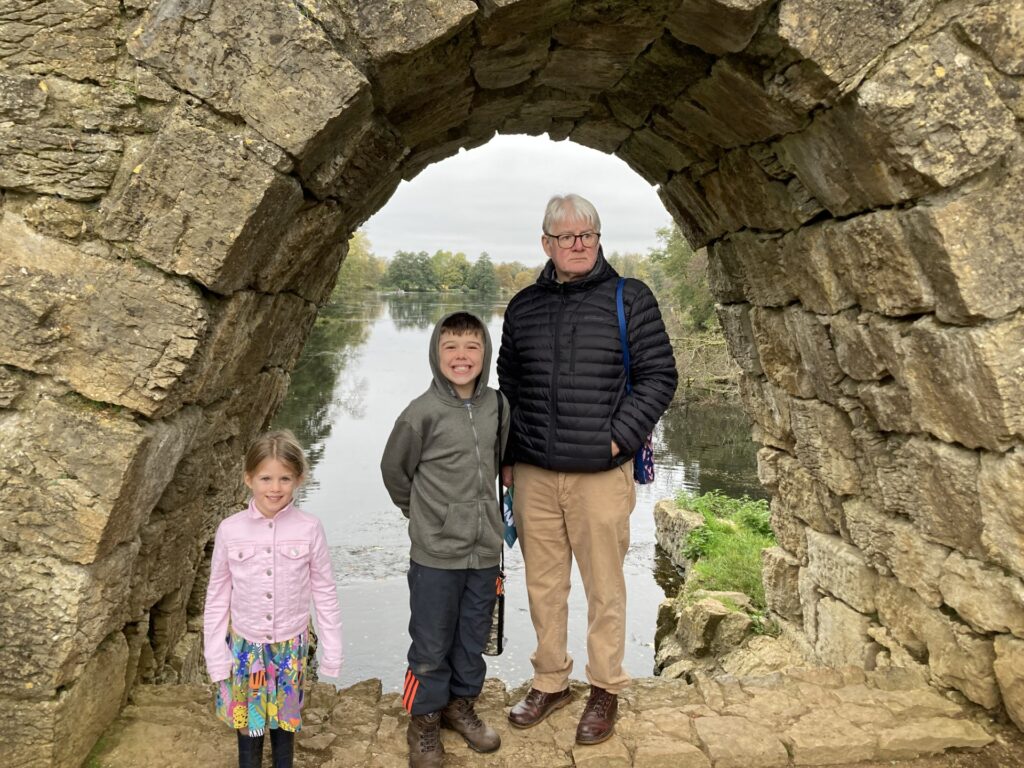
Len with grandchildren
It happened without any warning
“Len had a stroke on Sunday 12th January. Luckily, I found him within 10 minutes of it happening.
He couldn’t speak or move and the right side of his face had dropped. I knew straight away it was a stroke, just as the adverts say.
The ambulance came quickly and he was taken to the John Radcliffe Hospital in Oxford. He was lucky as he was able to stand up within 24 hours. But his right shoulder, arm and hand were completely immobile. He couldn’t swallow or speak. He was on purée food for over a week.
Therapists there did get him saying a few words, but he couldn’t remember the children’s or grandchildren’s names. It was obvious he could understand everything that was said, but couldn’t read or say what he wanted to eat. We had to read the menu and he would nod.”
Finding support to speak, read and move
“After he was discharged we had 8 weeks of support from NHS, but speech was only once a week. He still couldn’t read, but was starting to say a few words.
A friend of ours had a brain trauma several years earlier and was supported by Headway Thames Valley, so she recommended we reach out for support.
Marie, the Speech and Language Therapist, gave us strategies to allow Len to get his words out, building from saying just one word, then managing a few to saying whole sentences. Also started to try a little bit of reading, although that remains a challenge.
Sarah, supported for his shoulder, arm and hand therapy. We worked on the exercises and he did this daily. Again, an improvement could be seen each week.”
Supporting a partner after brain injury and its challenges
“The obstacles were a frustration for Len in particular. He couldn’t always make himself understood.
We went out occasionally, but it was difficult and he was not confident being in a busy pub or restaurant.
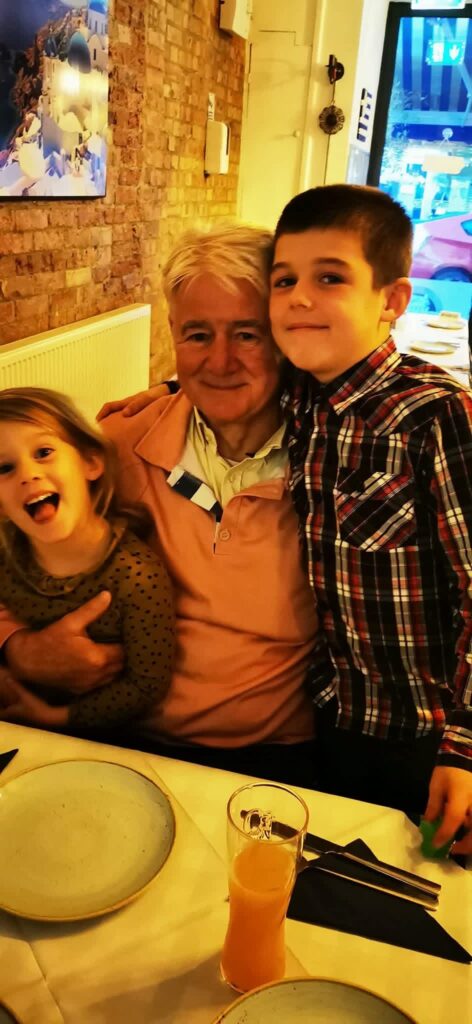
Len with grandchildren at a restaurant
We took it slowly by going for coffee at a quiet time, building to him going for coffee with a friend without me. We also went to some local pubs for lunch midweek to help with being able to have a conversation when it’s not too busy.”
The importance of doing things by himself
“One of the important things for Len was to have some independence.
This meant we concentrated on simple things like ordering a coffee and being able to pay with his card.
He makes porridge for himself in the microwave. Again, it took time to remember the steps, but he got there.
A sense of humour helps, sometimes we just have to laugh when he gets tangled up!”
Life now and looking ahead
“He is determined to get back to golf and continues with exercises every day to improve his hand mobility. He has set a target for golf by the summer.
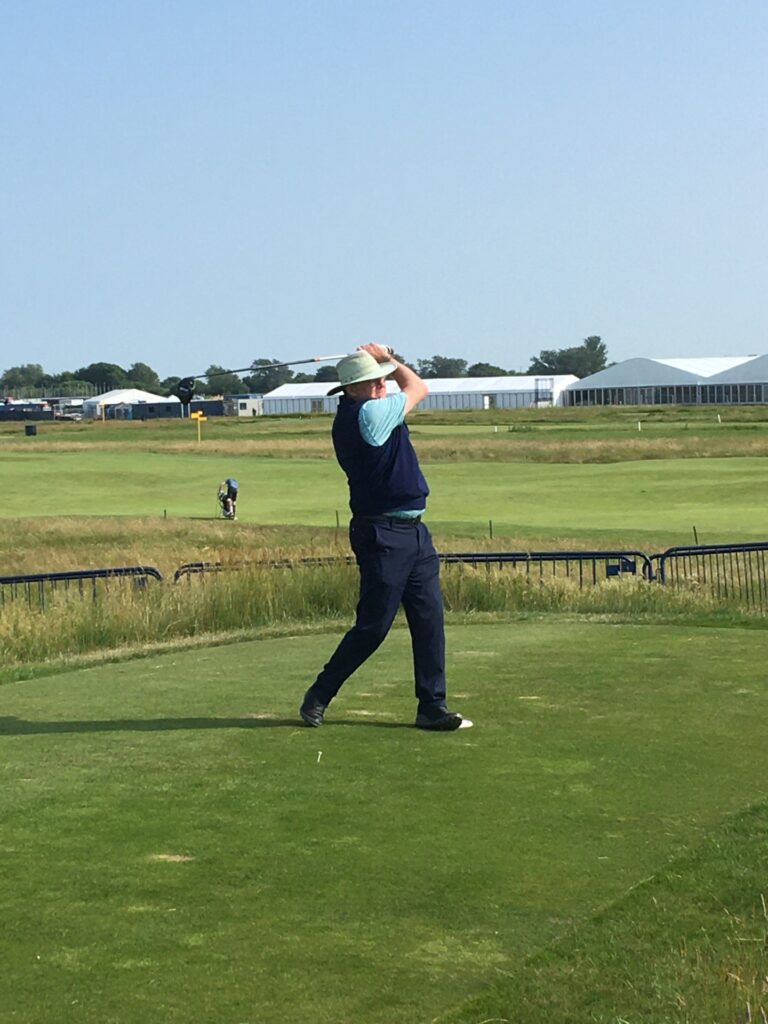
Len playing golf
Going to the theatre is ok now, but trying to have a conversation whilst in a public place remains a challenge. We sometimes go out with friends, but only four of us together at a time.
Conversation is much better, but it’s slow and a challenge in a crowd. We practice reading daily too.
Len continues with NHS support since he got to the top of the waiting list last September. We hope to have a few mini breaks this year – city breaks in UK and Europe.”
Message to share with someone newly diagnosed
“Whilst it seems quite scary, given determination and resilience, there is improvement, but it takes a long time.
Tap into as many resources to get support, and explain to friends how they can help so the partner can have a break.
Never give up. Keep trying and the results will come.
When he first came out of hospital he couldn’t move his shoulder. I got him to stand in front of a mirror and told him to shrug his shoulders. I helped by standing behind and moving his immobile side. Eventually, after doing it several times a day for a week or two there was a slight movement.”
Wish more people knew about brain injury
“It can happen out of the blue and affect people in different ways.
Many injuries can be fixed, but a brain injury takes years and can be frustrating for everyone: the patient, the family and friends and colleagues.
Time and patience with effort to do everything to aid recovery is the only way to get through it.”
Family fundraising
His son’s partner chose to support Headway Thames Valley by taking on the Brighton Marathon 2025. Kirsty raised an incredible 117% of her fundraising target. She said:
“My partner’s father suffered a stroke. Sometimes people don’t even know they’ve suffered a stroke, but sometimes it can change their, and their families lives, forever. Headway Thames Valley will directly help Rob’s father Len so it seemed right to choose to raise money for them.”
Her fundraising will help us continue supporting individuals and families adjusting to life after brain injury.
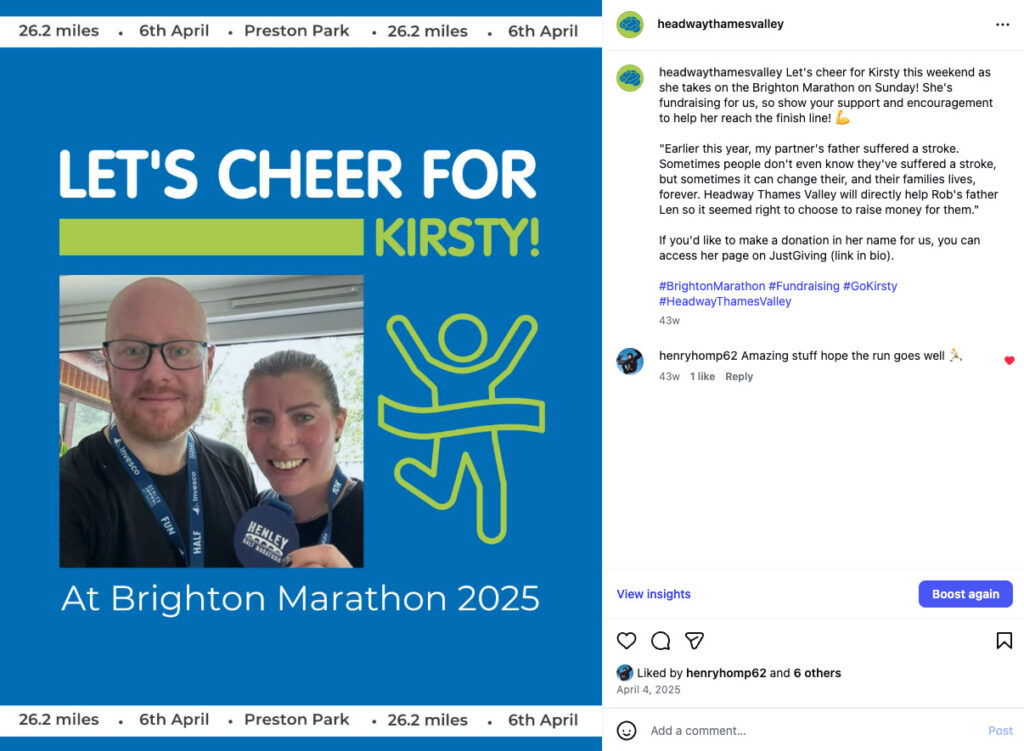
Instagram post for Kirsty’s fundraiser
Other recovery after brain injury stories
You can also read Lucy’s story navigating work and social life, Leigh’s story of rediscovery, Hannah’s silent struggles, or Paul and Barbara sailing through challenging times to learn about their journeys to recovery after a brain injury.
Stay connected!
Follow us on Instagram for more stories, tips and support, and subscribe to our newsletter to get updates straight to your inbox.